Time Slot
Curatorial Statement
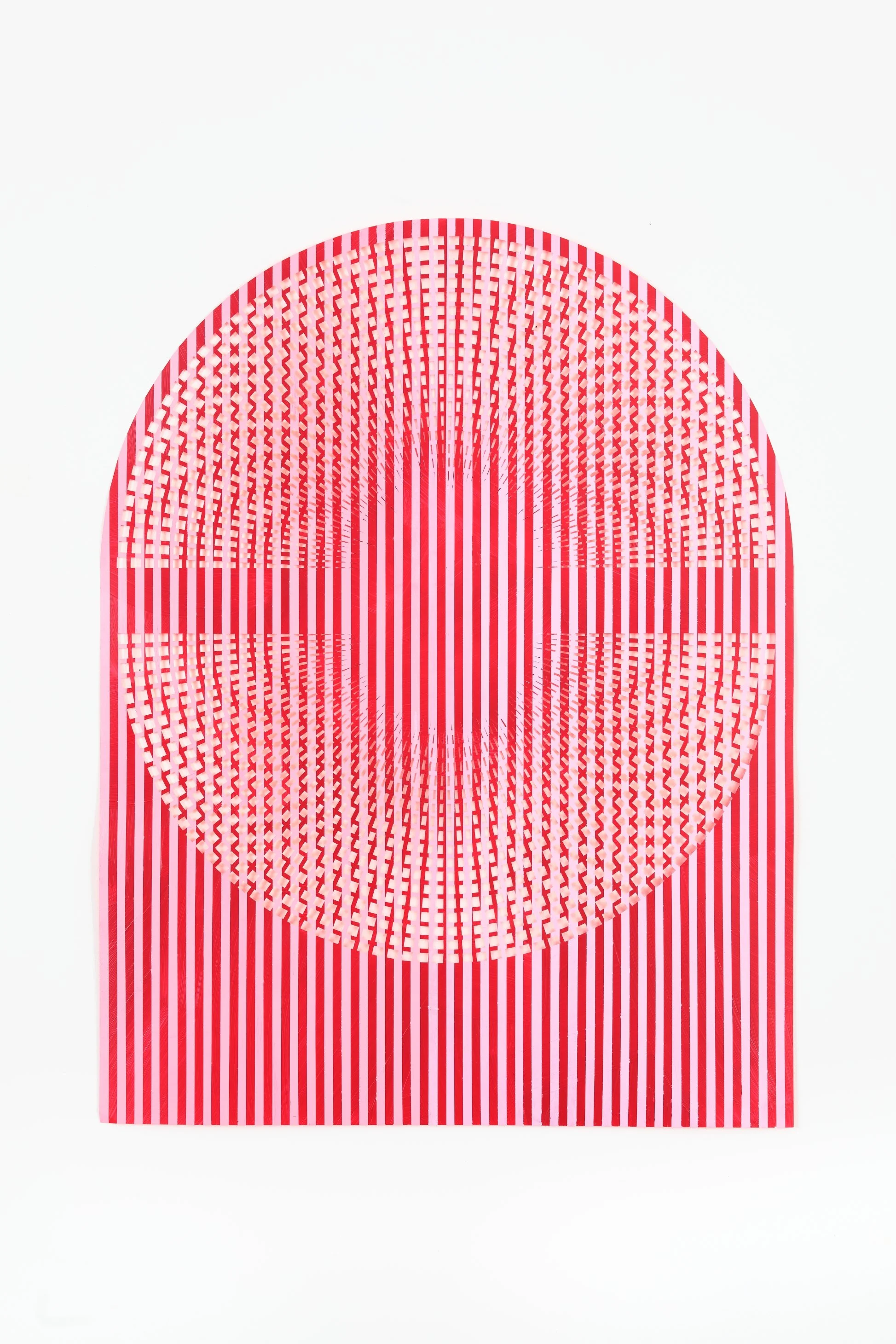
Art unfolds through time, yet the most compelling works possess the power to suspend it. The experience of art is durational, unfolding through embodied looking, spatial movement, and sustained attention. Phenomenological accounts of perception have long emphasized that seeing is not instantaneous but temporally constructed through the body’s encounter with form, color, and space. At times, a work concentrates attention so fully that awareness of external time recedes, and perception itself becomes the primary register of duration. In Time Slot, Leigh Suggs develops abstract visual forms that examine how visual perception structures the experience of time.
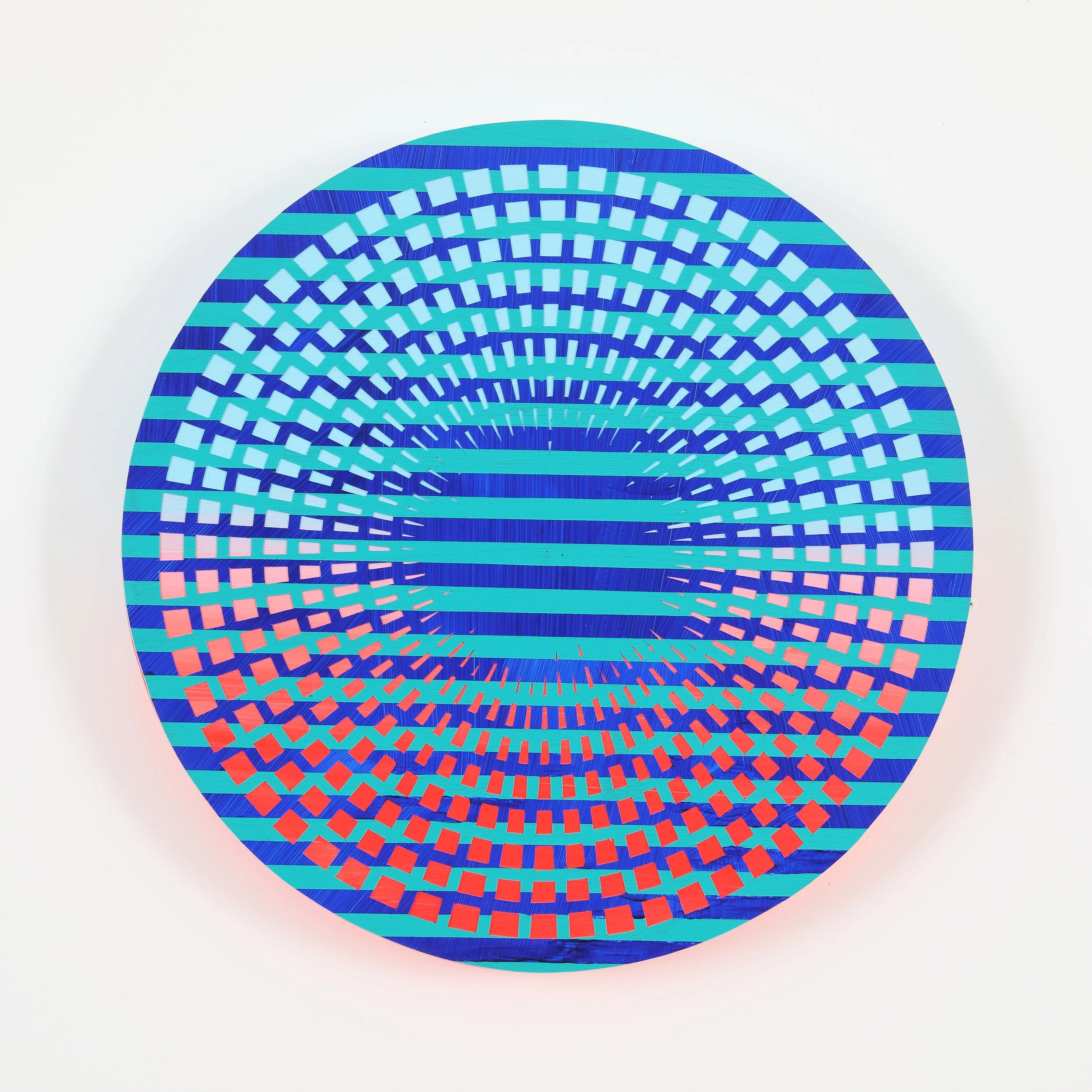
One of Suggs’ earliest memories is of closing her eyes and perceiving bursts of color. Beneath her eyelids, bright blue dots, circles, and shifting patterns appeared, producing a vivid visual field even in darkness. Although she no longer experiences these phenomena, known as phosphenes, her work remains informed by a sustained pursuit of the chromatic and perceptual conditions encountered within this subliminal space. In this sense, Suggs treats vision not as a passive optical event but as a temporally unfolding perceptual process. To engage her fields of color and form is to enter a duration of looking that allows reflection, pause, and perceptual awareness to emerge.
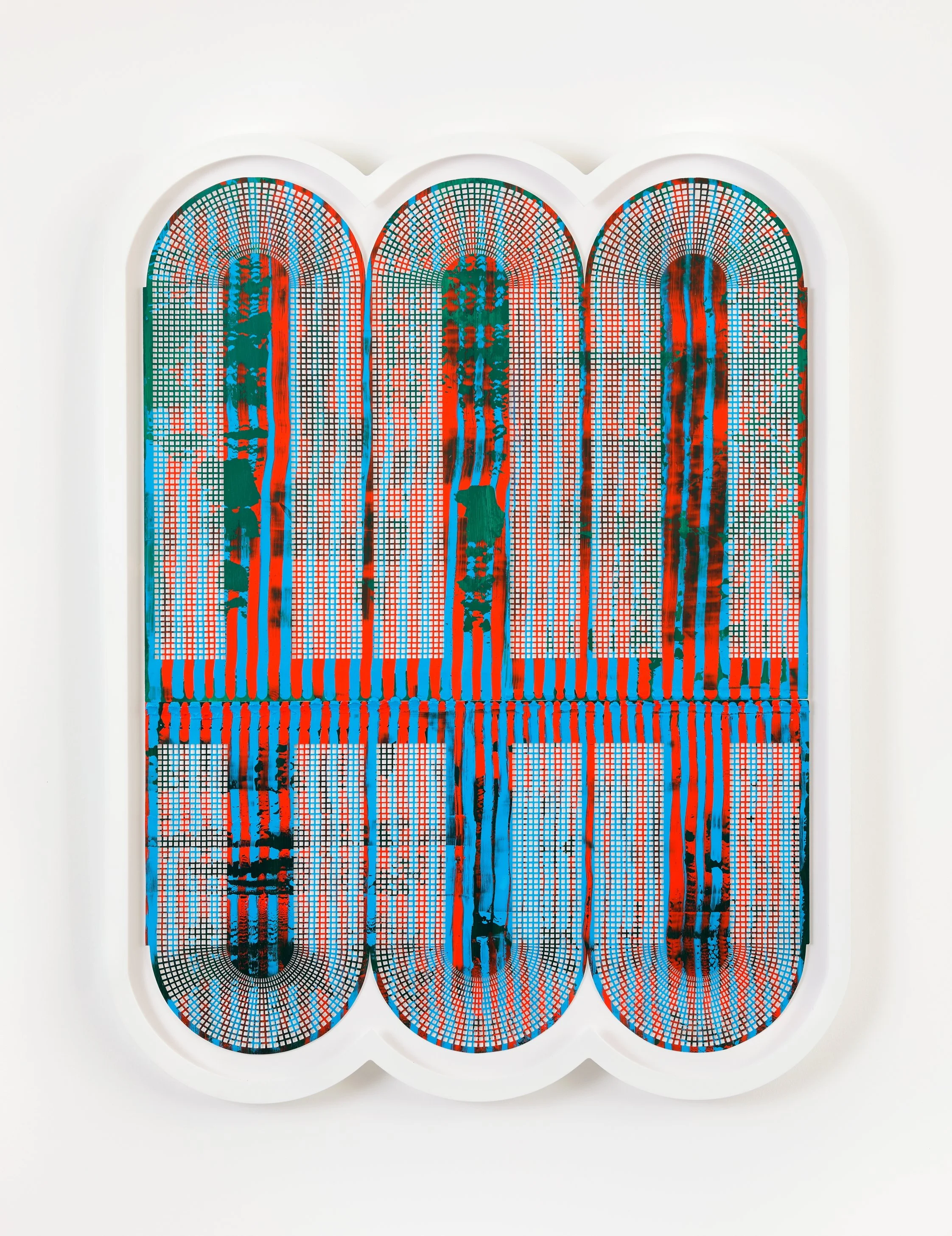
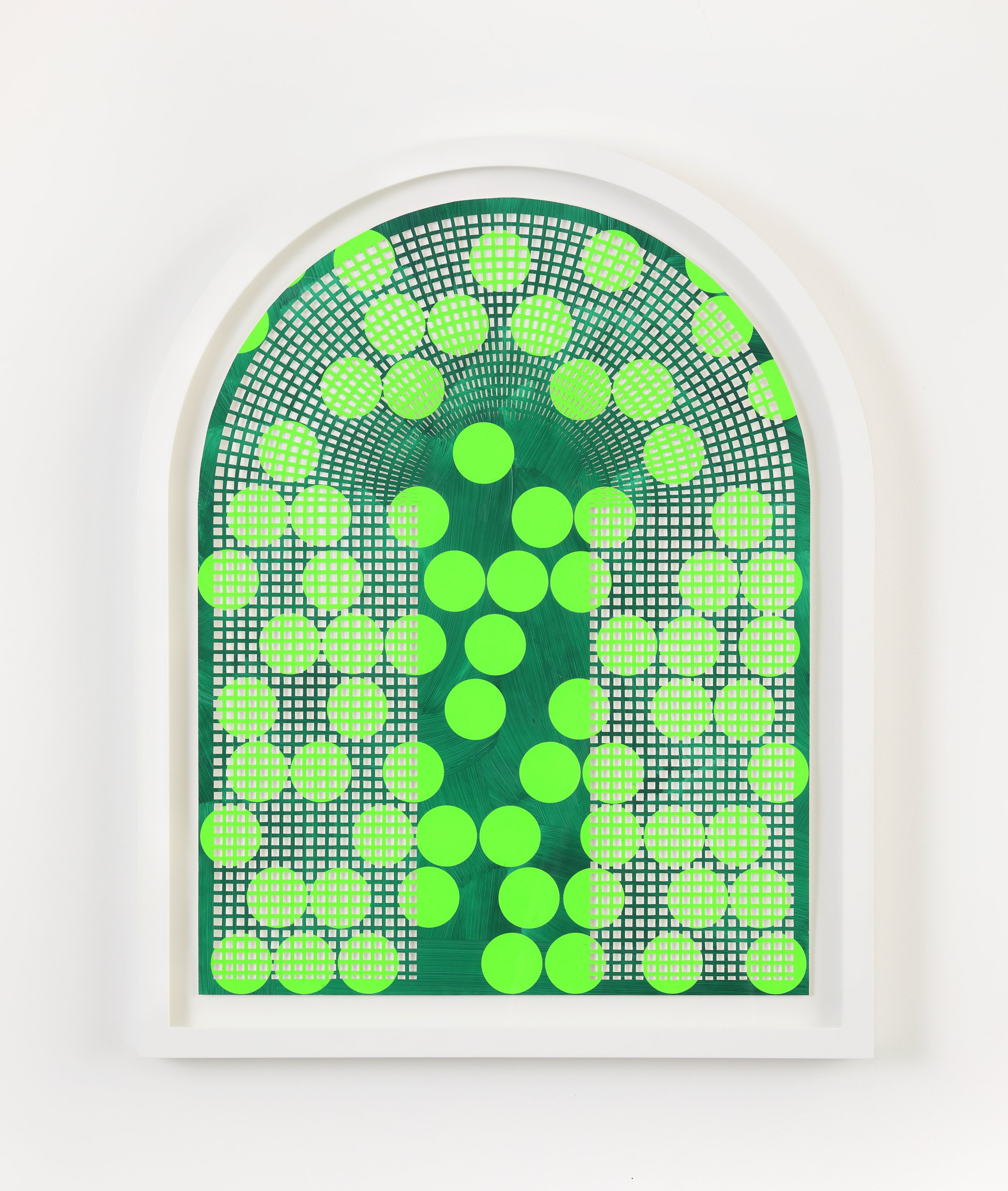
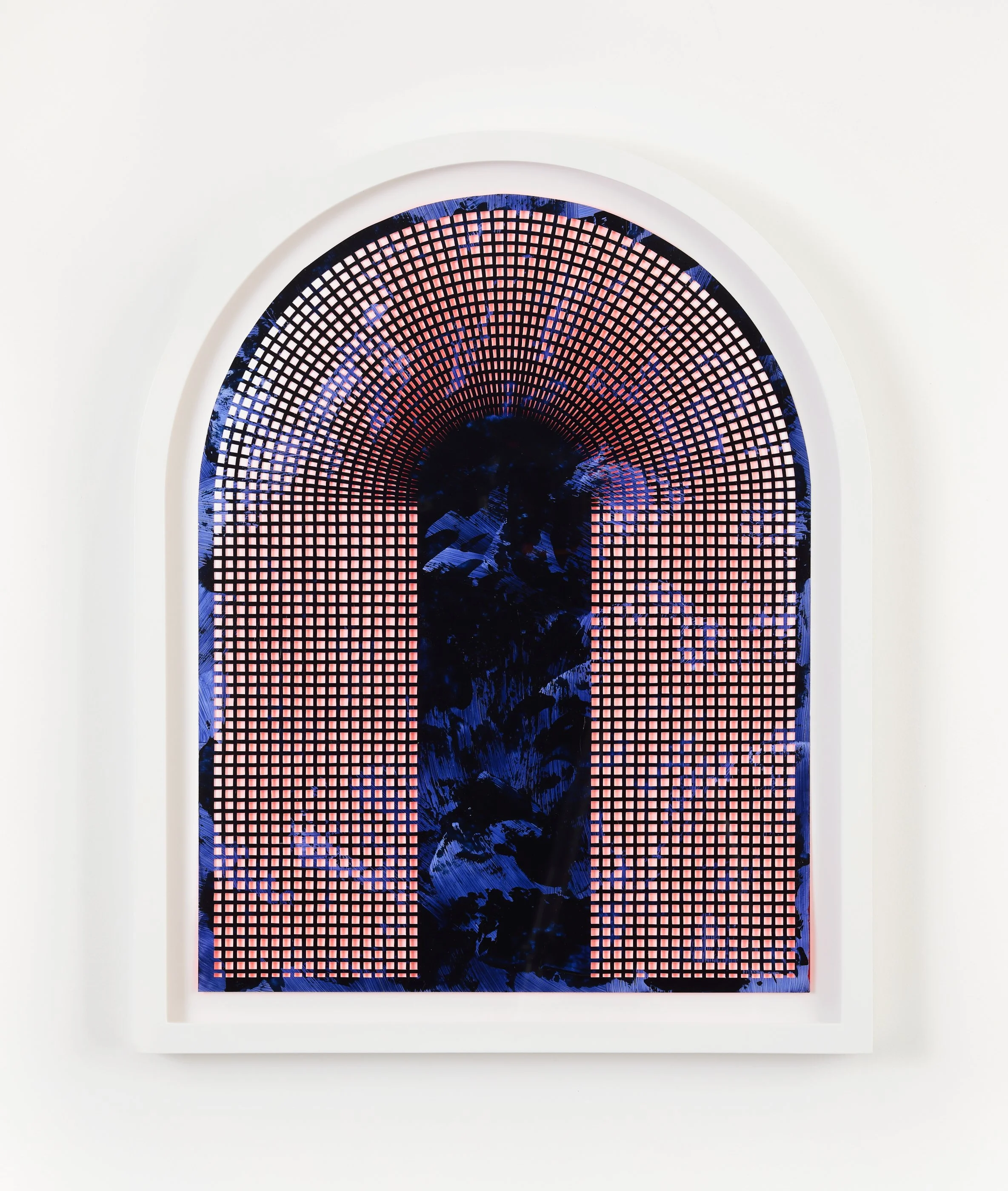
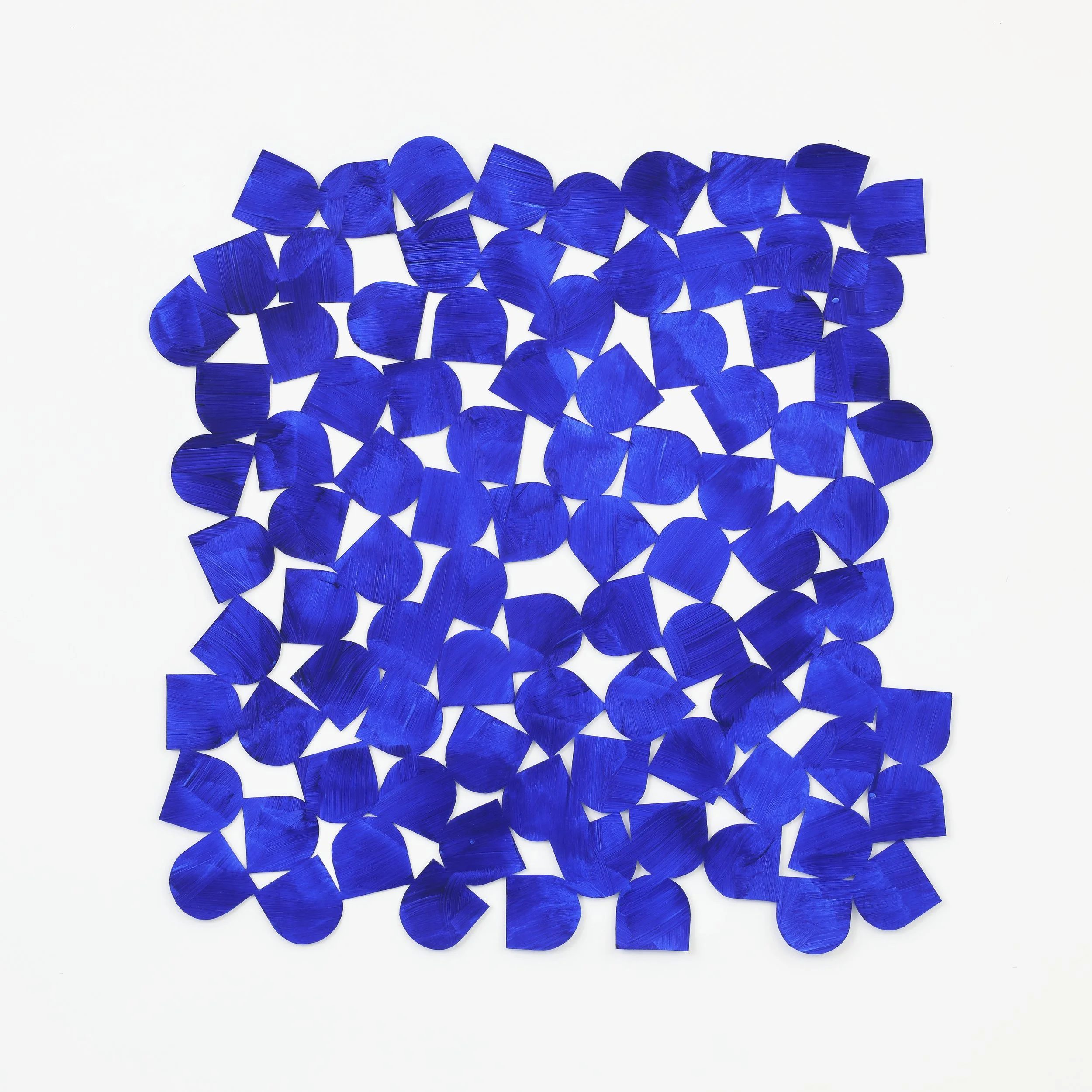
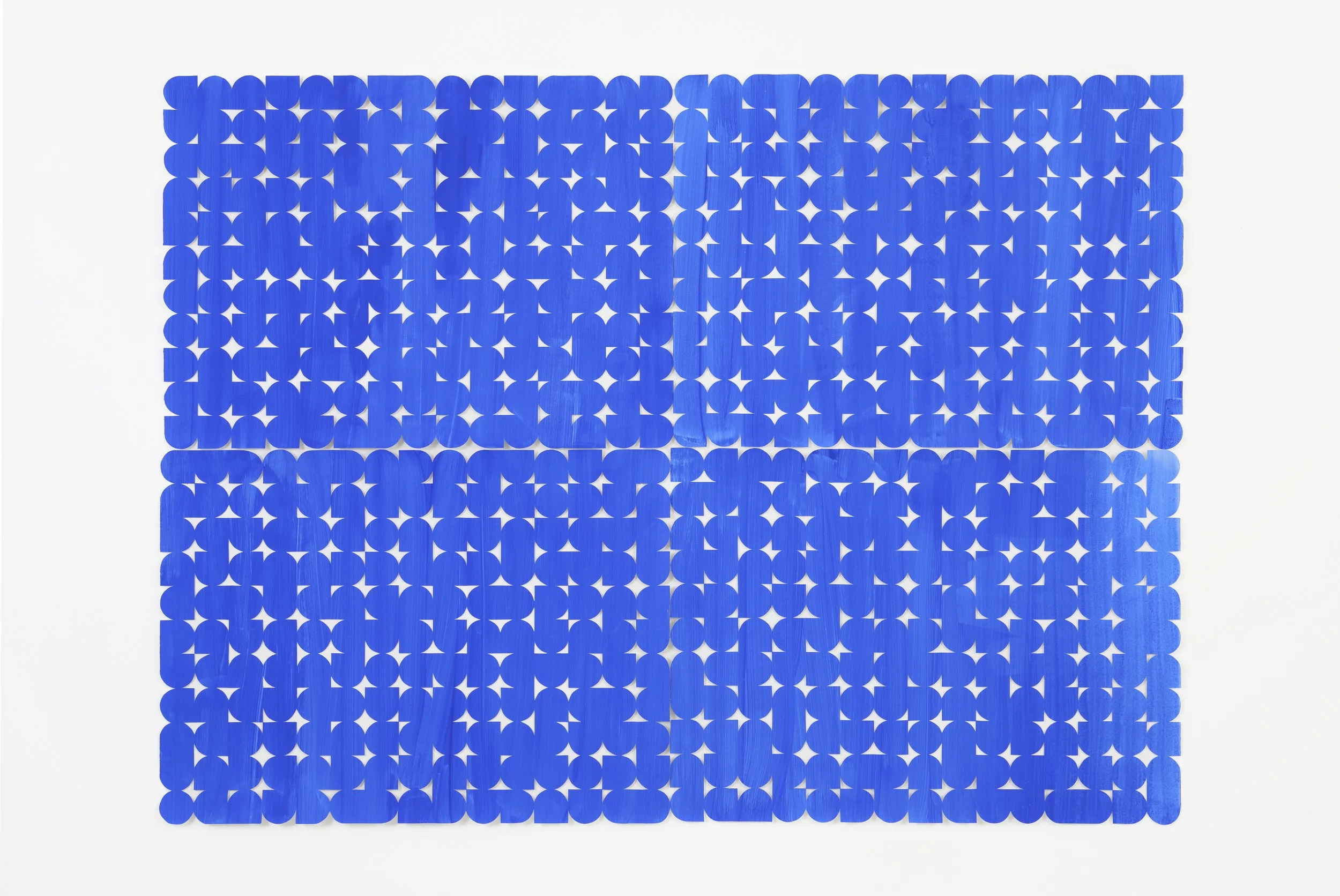
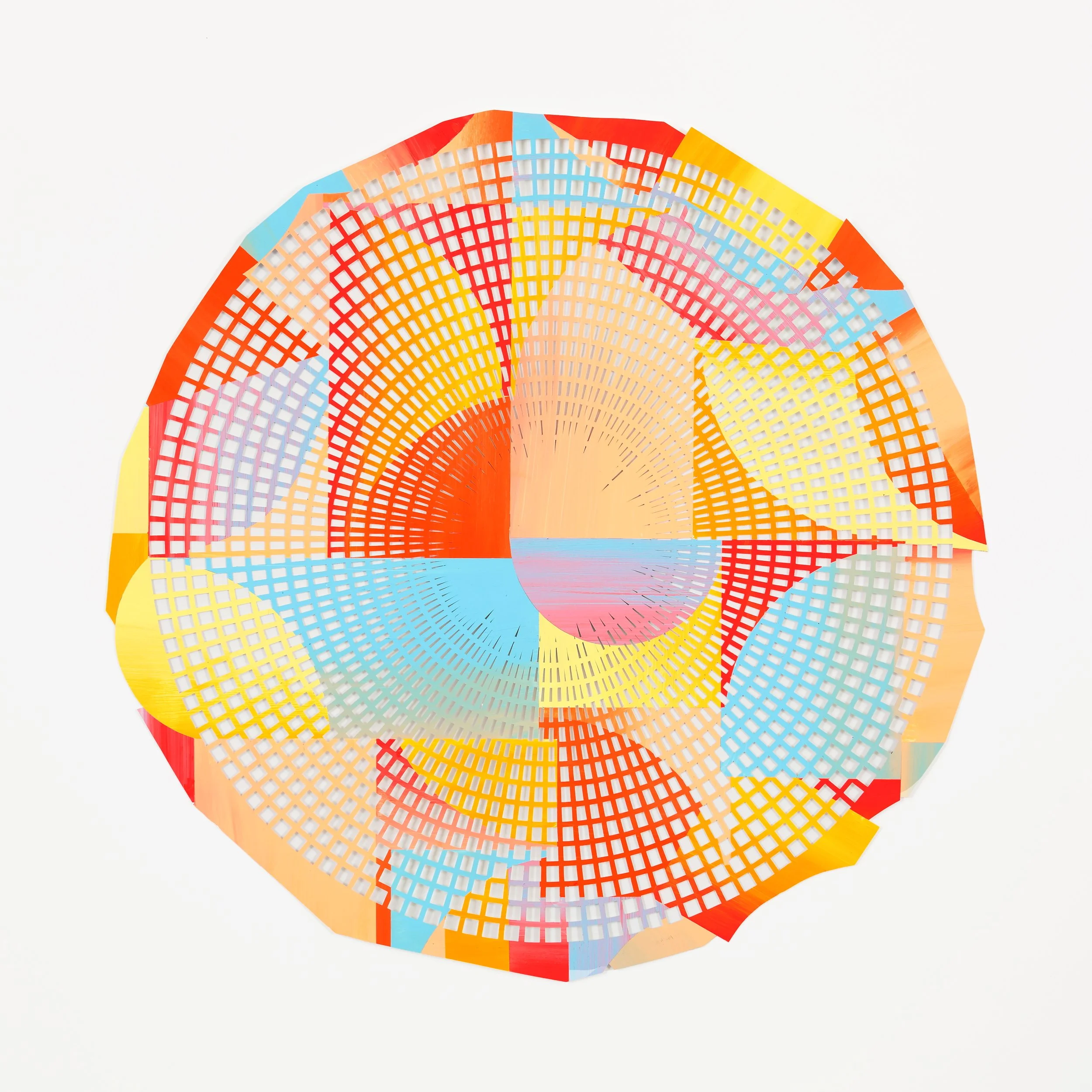
Like the luminous dots perceived beneath closed eyelids, color in Suggs’ work is not f ixed but contingent upon perception. In Time Slot, she stages multiple readings of a single chromatic field. When encountering the cobalt blue of Dimensions of Oneness, one viewer may attend to subtle modulations of stroke and opacity, while another apprehends a unified field, registering form over surface variation. In Hold 4You, a sequence of warm yellows, oranges, and reds is interrupted by an icy bluegreen; this chromatic intervention may register as either harmonic or dissonant, depending on the viewer’s perceptual response. Suggs employs color with precision, prompting sustained looking and inviting viewers to discern the visual structure as it unfolds over time.
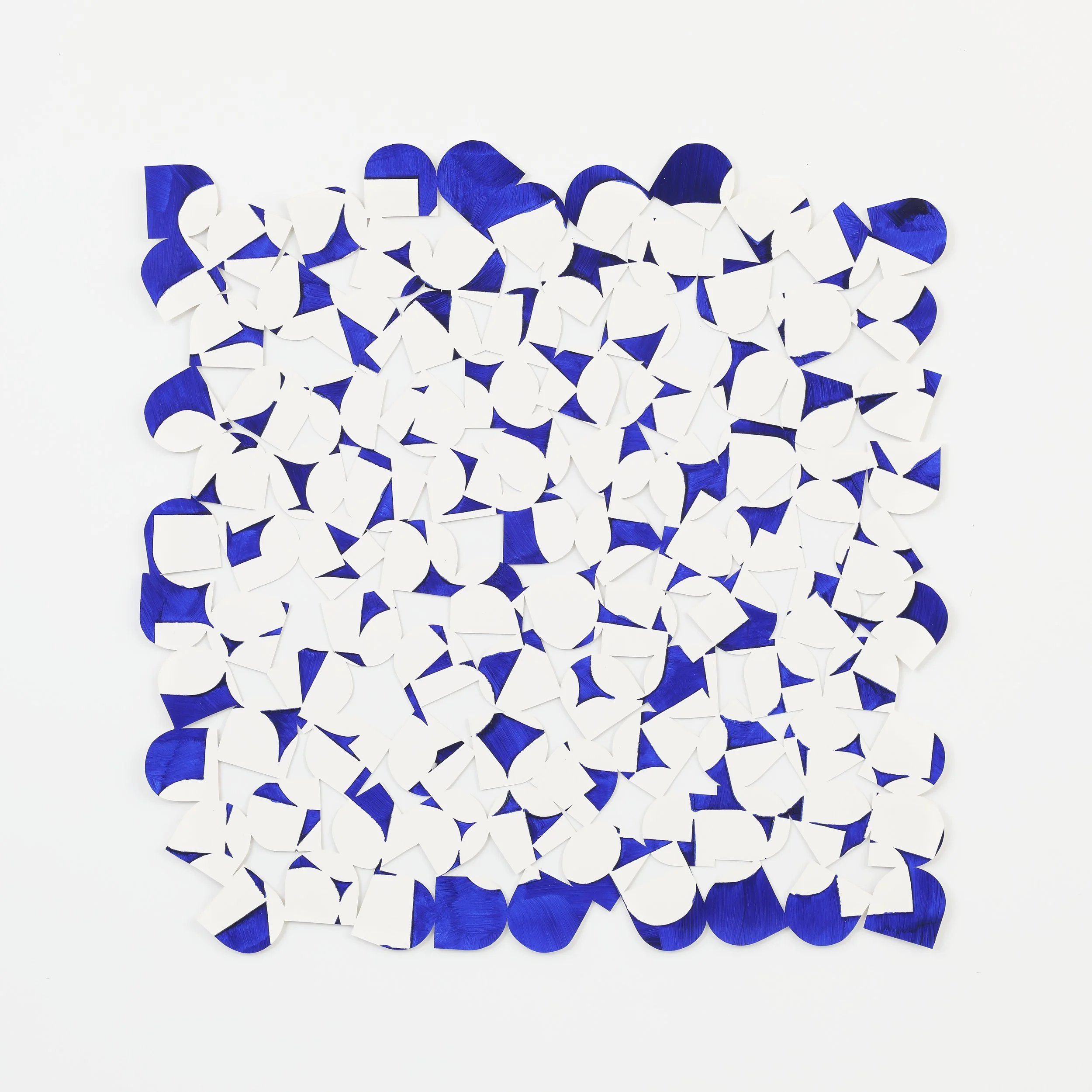
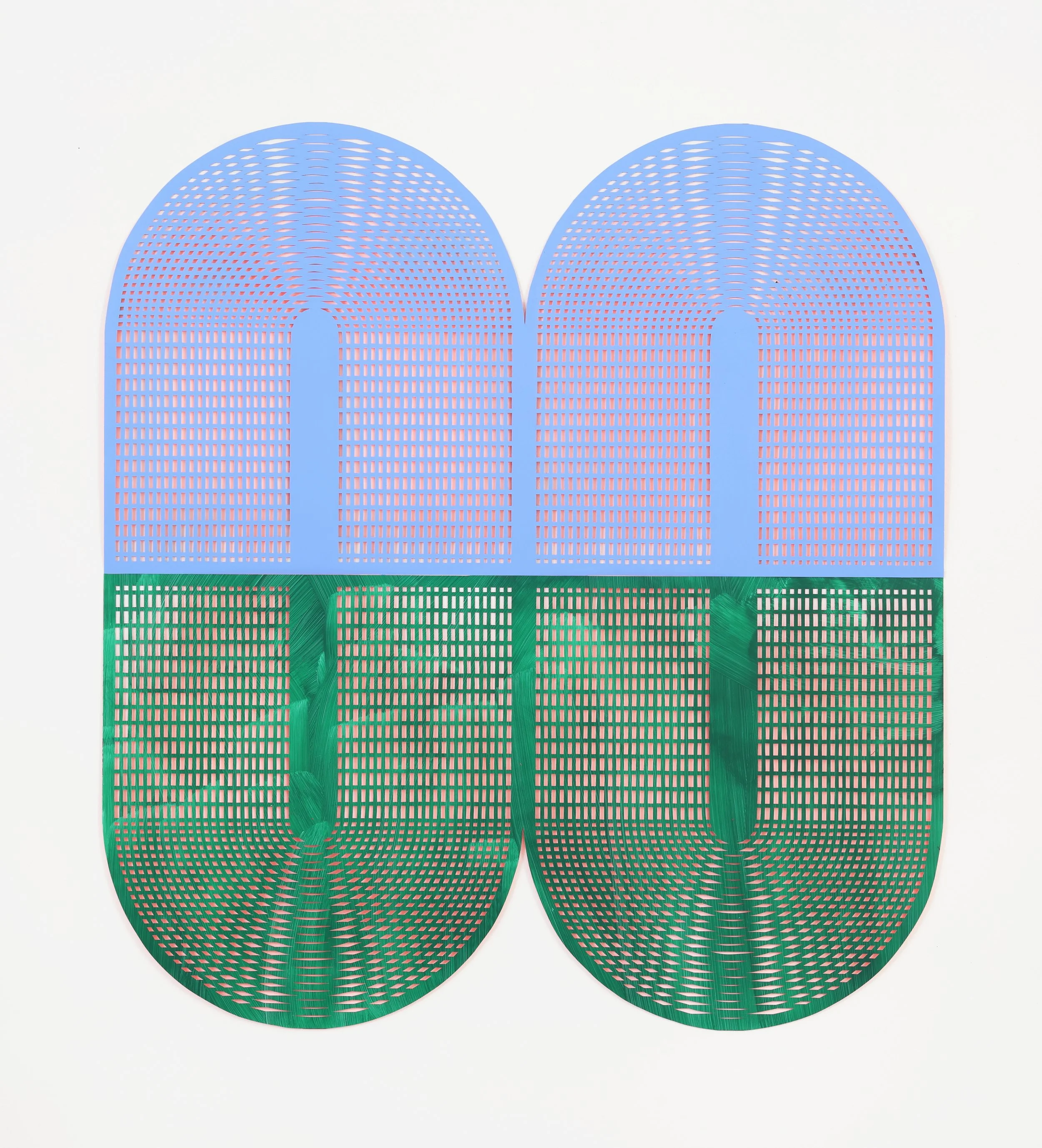
Suggs paints both sides of the paper, producing not only saturated surface color but also a diffused chromatic radiance that emanates beyond the plane. This strategy complicates the boundary between image and object, transforming the works into low-relief sculptural forms. As the eye lingers, color is perceived not only on the paper’s surface but within the surrounding shadows, which become subtly infused with reflected hues.
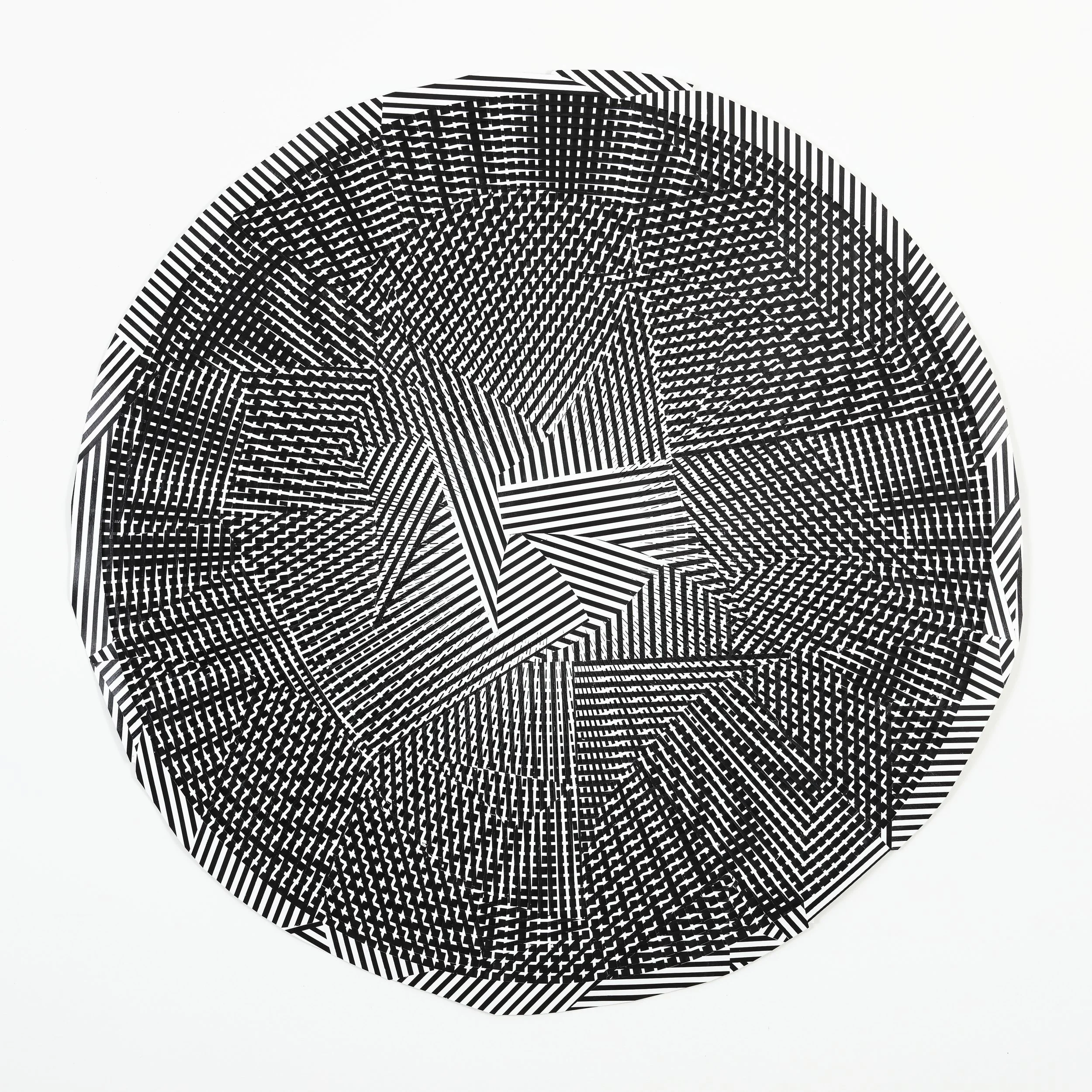
Ocular in form, the shapes that recur throughout Time Slot evoke the mechanics of seeing itself. Intricately painted patterns and vibrant chromatic intervals encourage a mode of visual excavation, in which perception unfolds gradually rather than instantaneously. In The Exit is Open, Suggs eliminates color entirely, foregrounding form as a disorienting perceptual field. A central pupil-like core of black-and-white stripes diffuses outward into an iris of cut bands arranged in shifting orientations, frustrating optical stability and resisting immediate comprehension. The viewer’s eye struggles to synthesize the whole, necessitating duration, attention, and perceptual adjustment.
Time Slot brings together Suggs’ precise paper constructions and her sustained investigation of perception as a means of structuring temporal experience. Through cutting, layering, and repetition, visual order gives way to openness, and surface yields to depth. Meaning emerges through duration rather than instant legibility, rewarding sustained attention and allowing space, structure, and time to remain active elements of the work.