Romare Bearden (American, 1911-1988)
Untitled (Girl in Pond), 1972
Paint with paper collage and surface abrasion on fiber board
17 ½ × 7 ¾ in.
26 ¾ × 16 ½ in. framed
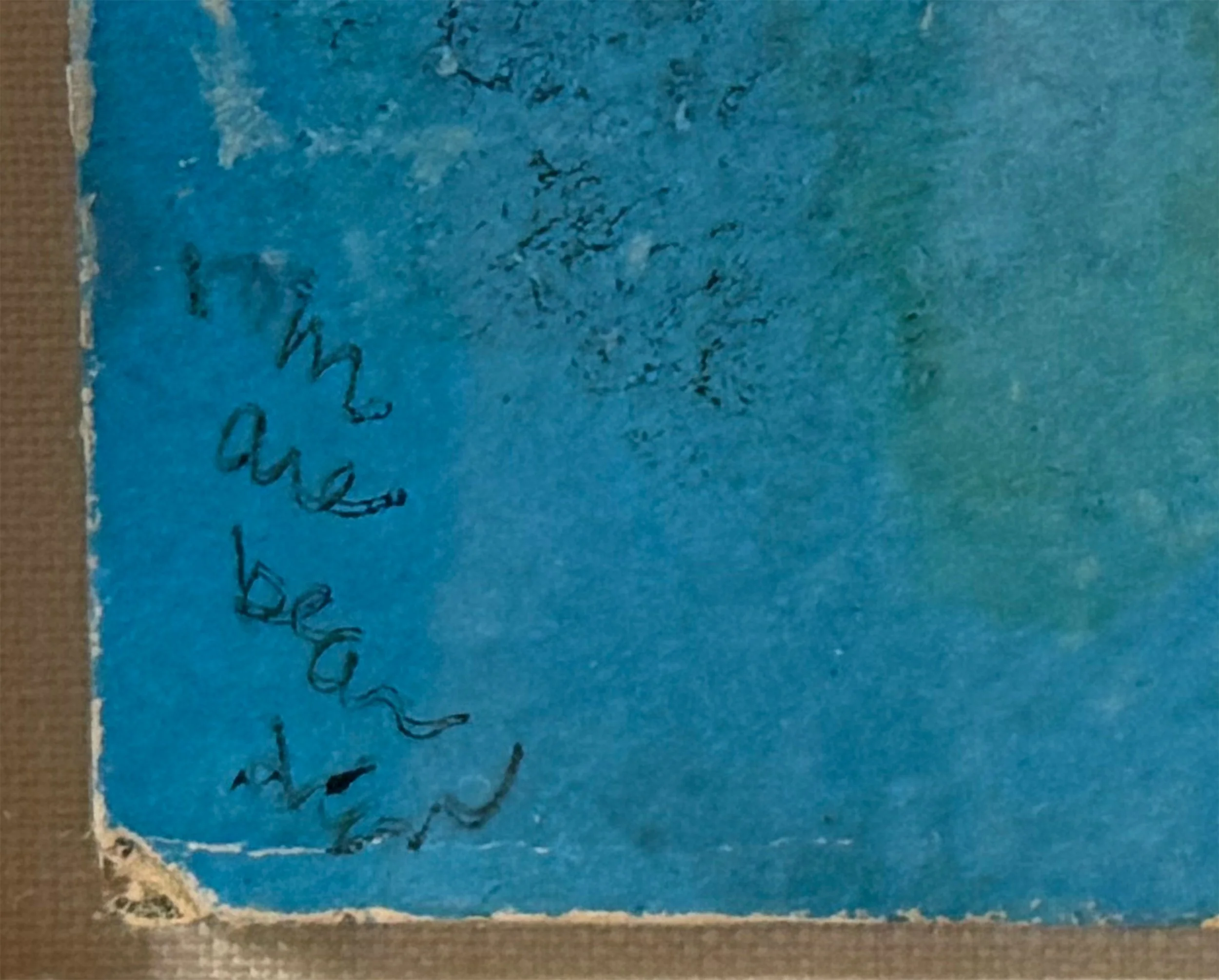
Signed to lower left, “Rom/are/bear/den”
Provenance
The Artist;
Jerald Melberg Gallery;
Philip Van Every Collection, NC;
Private Collection, NC, acquired from the above in 1999.
Exhibition History
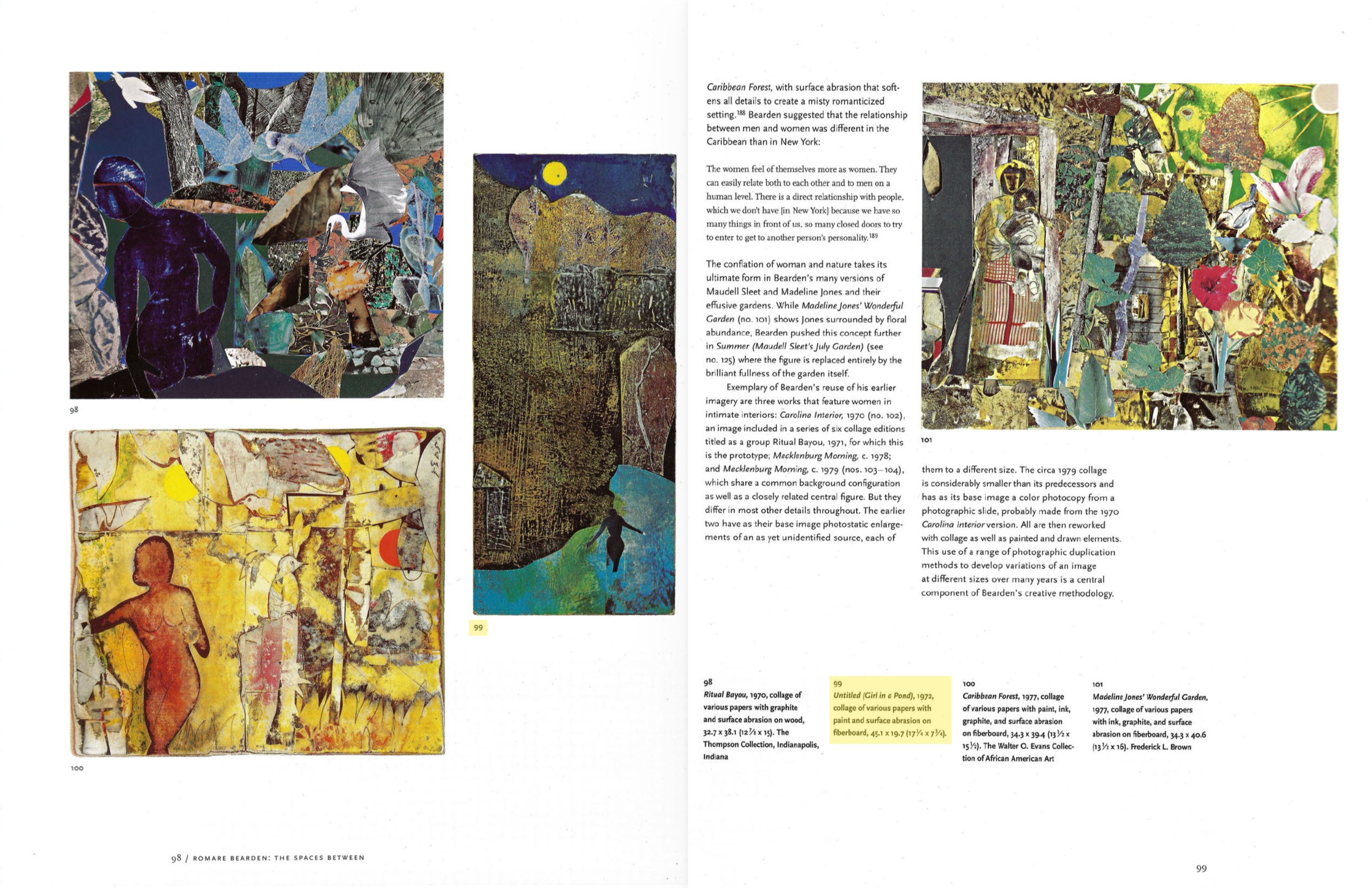
The Art of Romare Bearden, Cat. no. 99
National Gallery of Art, Washington, D.C., 14 Sept. 2003–4 Jan. 2004
San Francisco Museum of Modern Art, 7 Feb.–16 May 2004
Dallas Museum of Art, 20 June–12 Sept. 2004
Whitney Museum of American Art, 14 Oct. 2004–9 Jan. 2005
High Museum of Art, 29 Jan.–24 Apr. 2005
Bearden/Wilson, Private Donor Lecture and Reception
Art Institute of Chicago, 18 Jan. 2007
Romare Bearden: Southern Recollections, Cat. no. 88
The Mint Museum, Charlotte, 9 Feb. 2011–8 Jan. 2012
Tampa Museum of Art, Tampa, 28 Jan.–6 May 2012
Newark Museum, Newark, 23 May–19 Aug. 2012
Literature
Fine, Ruth. The Art of Romare Bearden, National Gallery or Art Washington, with Harry N. Abrams, Inc.; 2003.
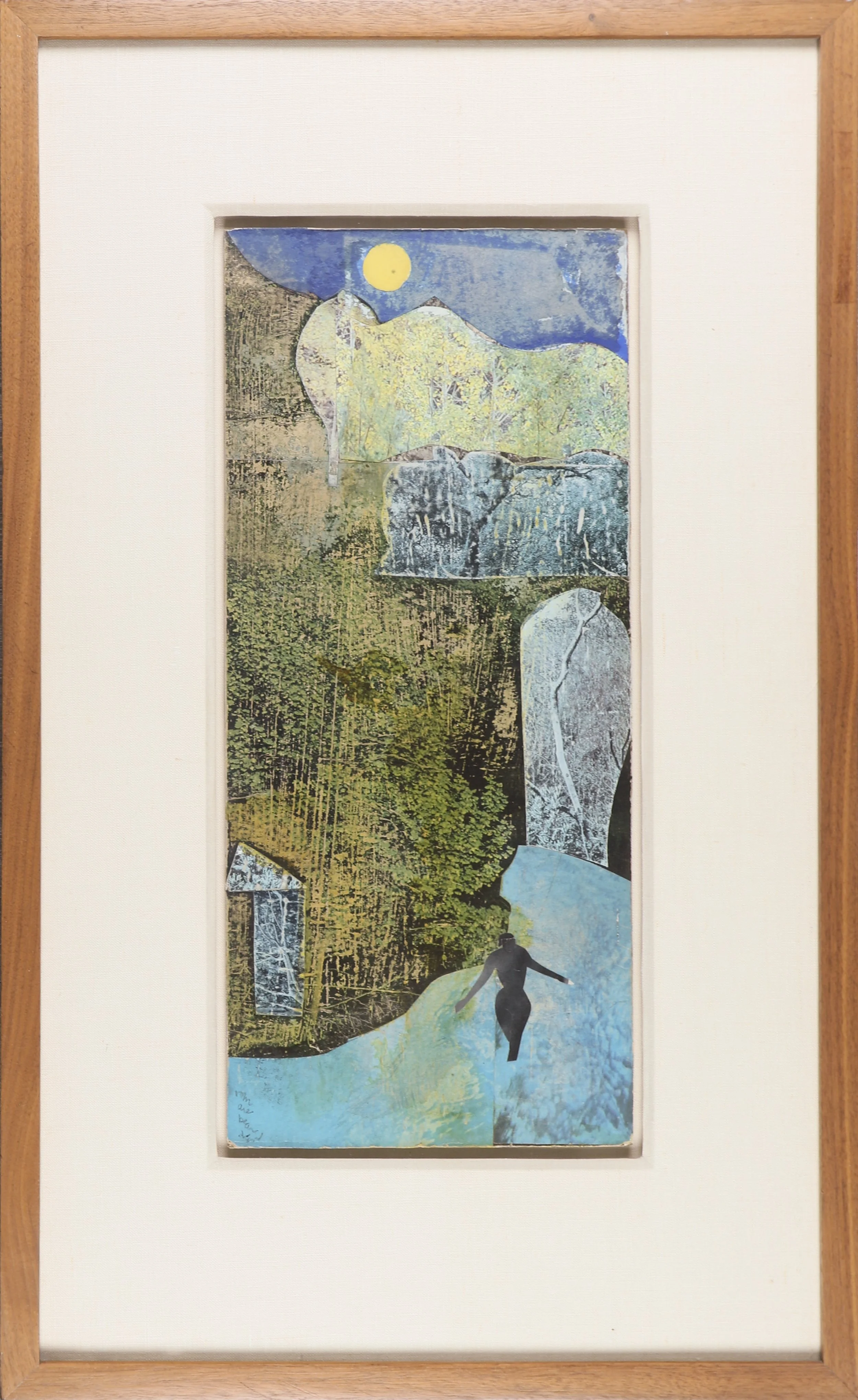
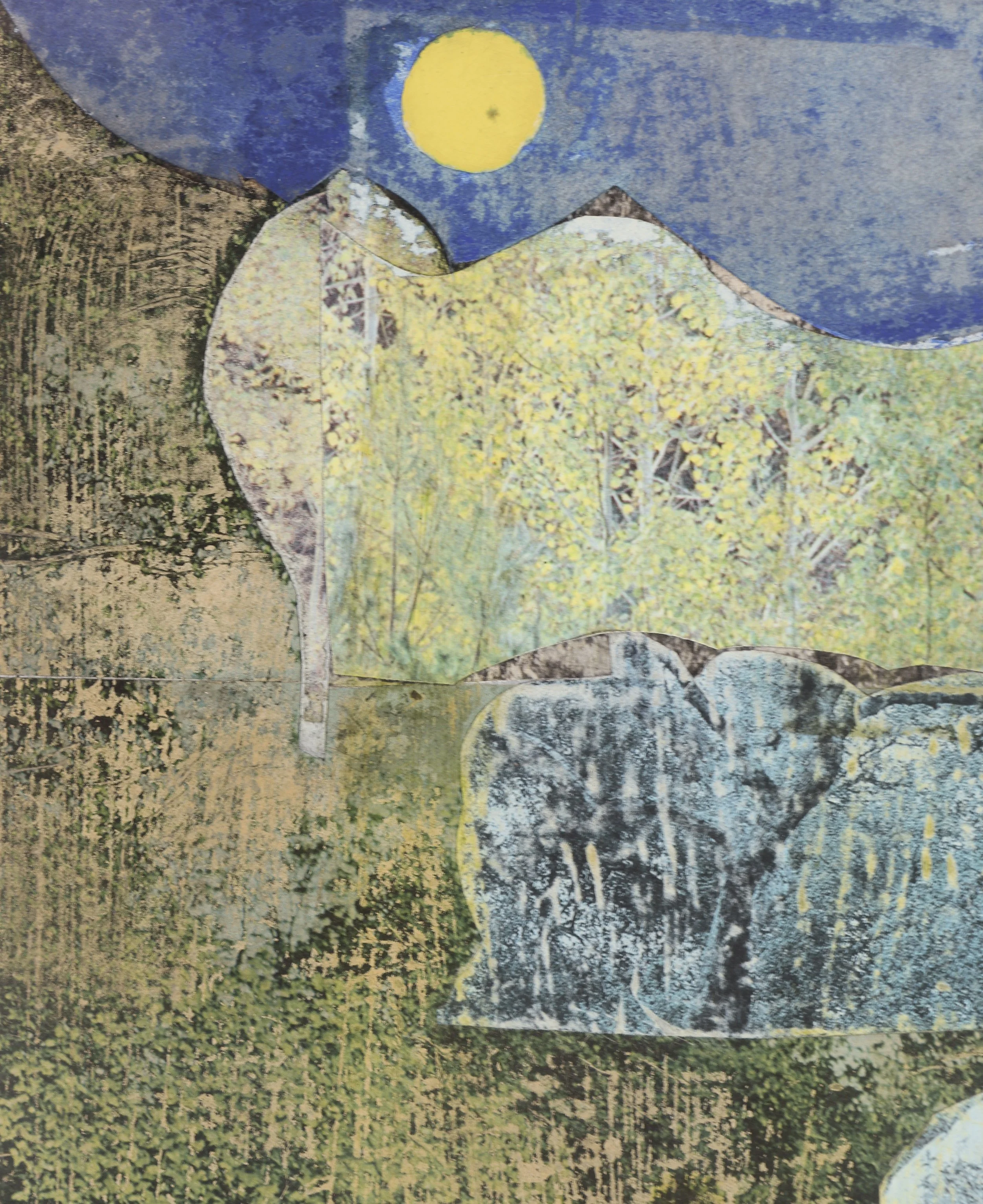
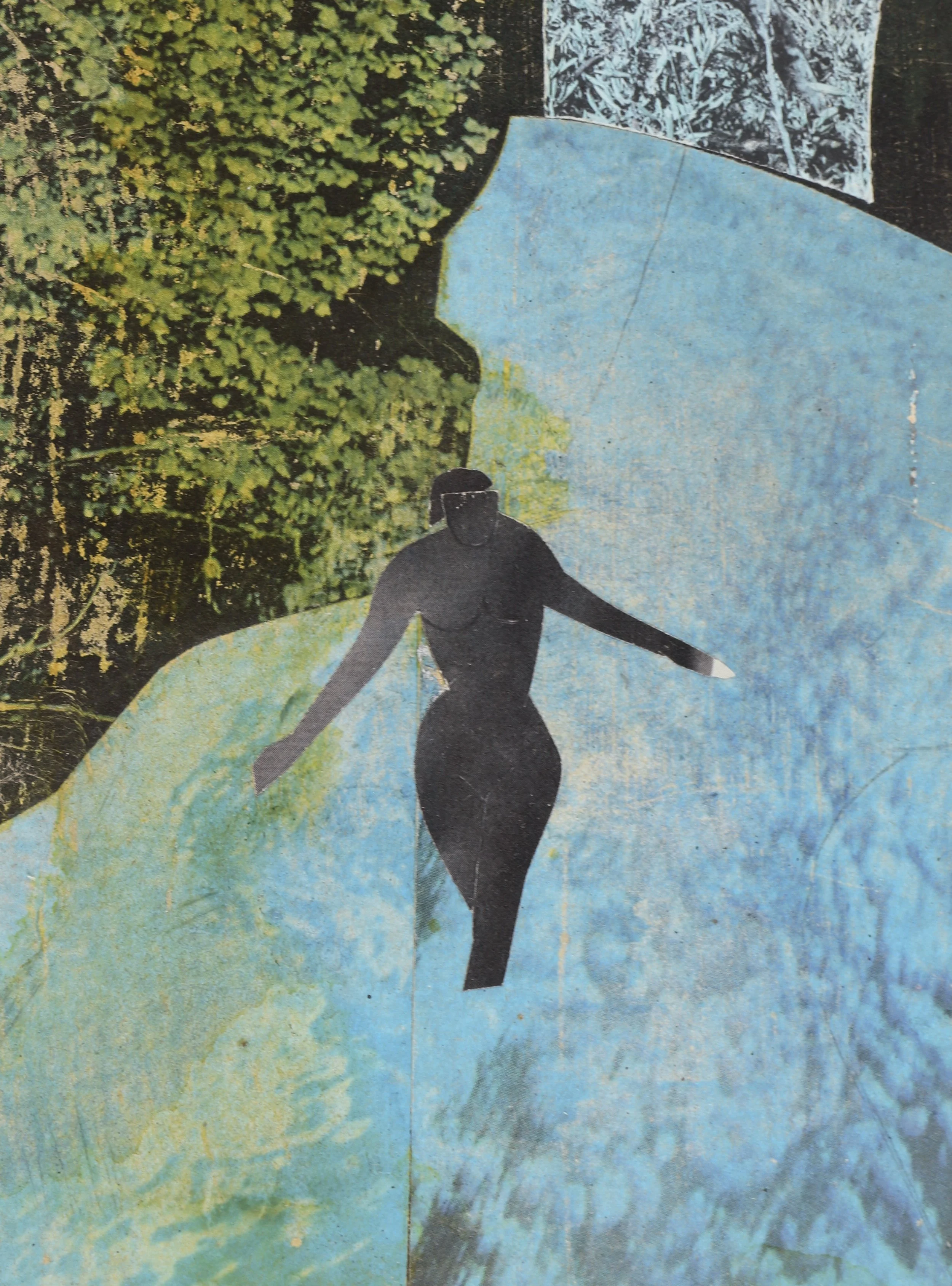
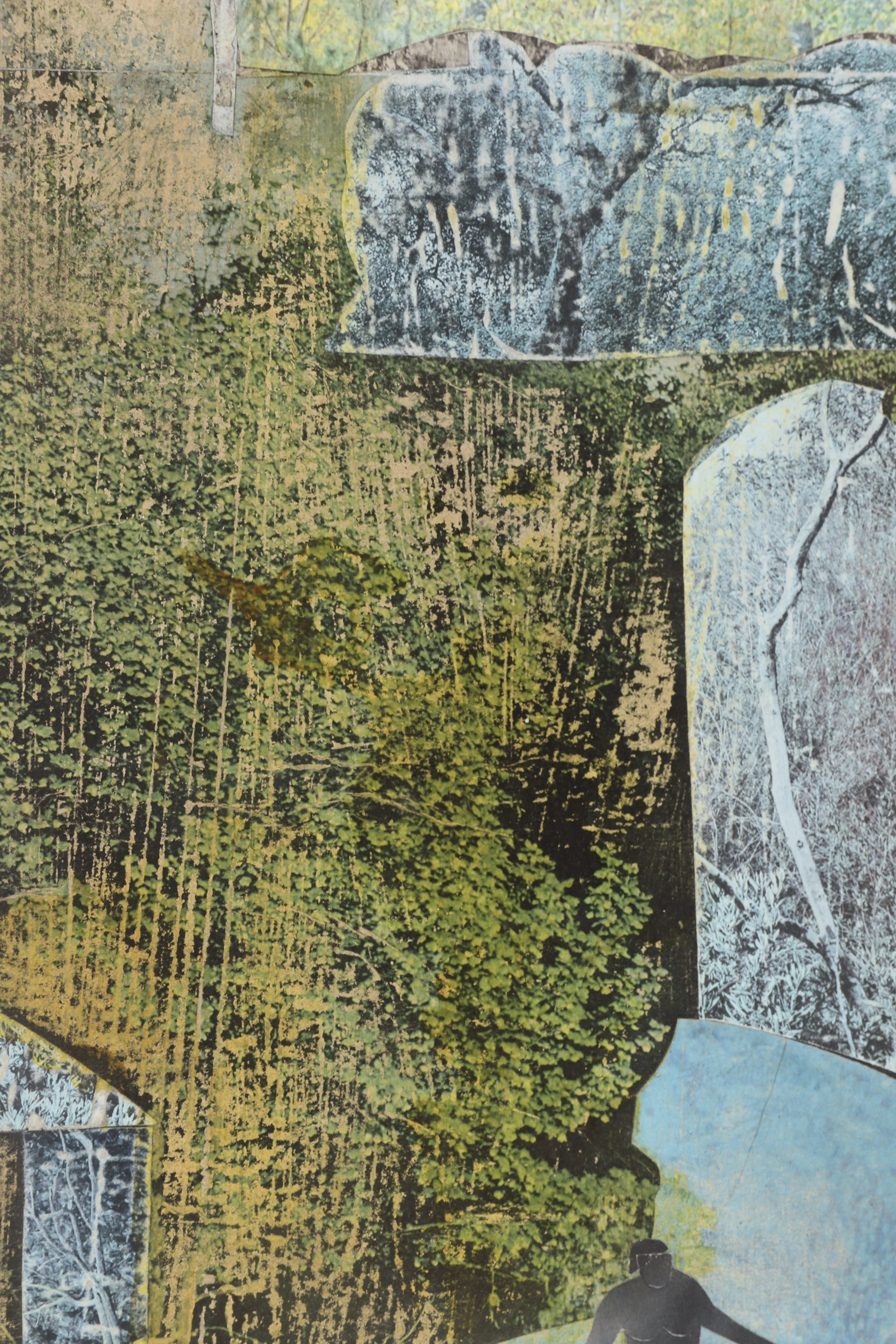
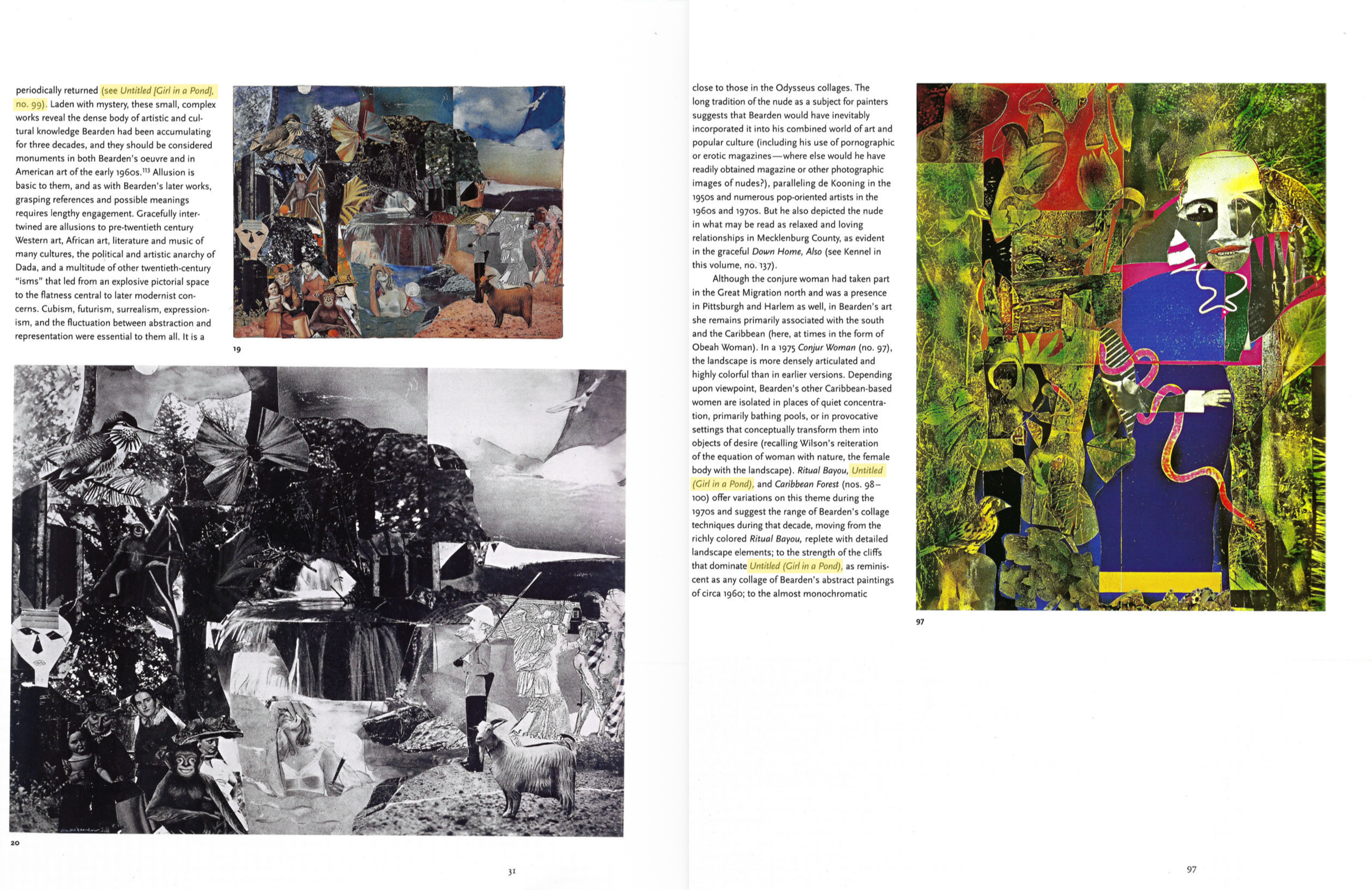
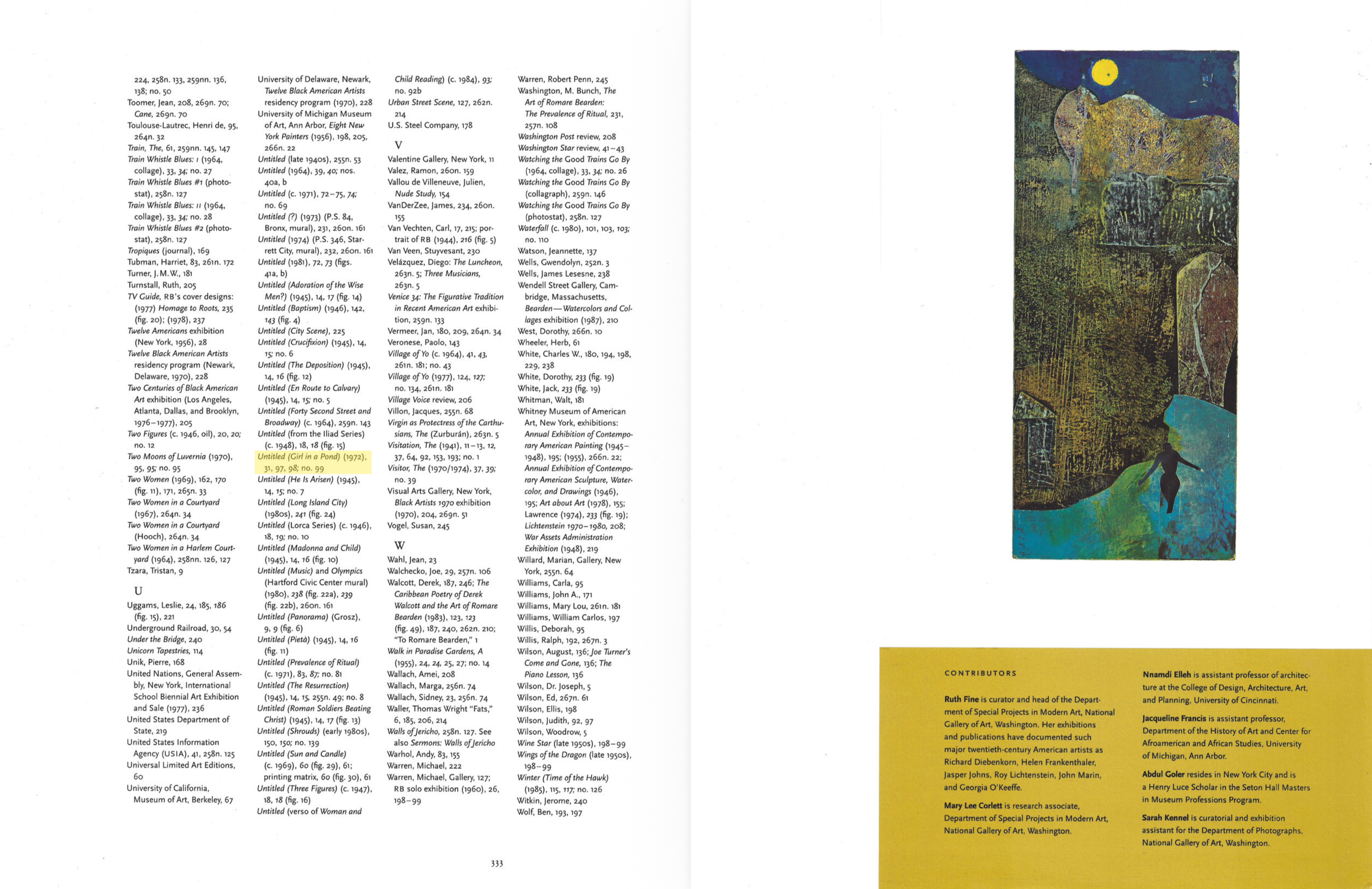
Romare Bearden’s work Untitled (Girl in Pond) (1972) holds a unique position in his oeuvre for the convergence of several major themes surrounding women, the Caribbean, and the development of his collage practice. Throughout his career Bearden frequently used women as subjects in his work to explore several different themes, including partnership, community roles, and Black sexuality. Bearden explored the subject of the Black nude through both paintings and works on paper, engaging with one of the primary subjects of art historical canon and through so doing reclaiming Black sexuality and eroticism. The sexuality of the nude figure in Untitled (Girl in Pond) is emphasized by her placement in a secluded natural environment. In his Caribbean works, Bearden frequently placed nude female figures in isolated environments such as bathing pools or dense jungles, transforming the female figure into an object of desire by equating her body with the landscape.
Untitled (Girl in Pond) also demonstrates the breadth of Bearden’s technique with works on paper in the early 1970s. When compared to works of a similar subject such as Ritual Bayou (1971) and Caribbean Forest (1977), Untitled (Girl in Pond) presents a markedly different style, with a far narrower color palette and denser, less articulated texture. A unique element of this work is its use of surface abrasion to create texture, layering the scene with a hazy mist over night sky and tangled foliage emerging from an inky black undergrowth. Bearden’s mixing of premade images with cut paper and abrasion in Untitled (Girl in Pond) sets the work apart from previous works on paper, which more explicitly demarcated preexisting images from cut paper. The unique process of the work results in soaring cliffs bathed in soft moonlight, forming fields of color and texture reminiscent of Bearden’s earlier abstract paintings. Unlike the frenzy of activity and color present in more close-up perspectives of jungle landscapes, Untitled (Girl in Pond) offers a wider perspective that doesn’t just equate the woman with the landscape, but places her and the viewer in a private communion with it.
Through the privacy granted by the looming cliffs and the abstraction of her form, Untitled (Girl in Pond) cloaks the woman and the viewer together in a private, sensual moment. The viewer feels as though they are a hidden watcher let in on a secret ceremony. There is an element of the voyeur, as much for the woman as for this hidden pool. However, the distance of the figure from the viewer characterizes her as an autonomous subject. Unlike other Caribbean nudes, this figure is not solely there for the viewer’s enjoyment; there is a sense that she and the viewer are enjoying the moonlit scene together. In addition to the nude, and indeed at times through the nude, Bearden portrayed Black women as central pillars of community and family life with or without the presence of a male figure. The enclosed nature of the scene and the ease of the figure’s posture suggests an intimacy of partnership as well as the sensuality of desire.
Untitled (Girl in Pond) has been in private collection in North Carolina for over twenty years. It was acquired by its most recent owner from the Estate of Philip Van Every in 1999. Van Every acquired the piece from Jerald Melburg Gallery, who received it from the artist in the 1970s. In the early 2000s, it was selected by Ruth Fine to be included in the most seminal Romare Bearden exhibition to date, The Art of Romare Bearden, from 2003-2005. Fine, a curator at the National Gallery of Art from 1976-2012, examined over a thousand works by Bearden in private collections and museums before selecting 131 to be included in the landmark retrospective. While a part of that exhibition Untitled (Girl in Pond) traveled to some of the most prestigious institutions in the United States, including the National Gallery of Art, Washington DC; The San Francisco Museum of Modern Art; The Dallas Museum of Art; The Whitney Museum of American Art, New York; and the High Museum of Art, Atlanta. Untitled (Girl in Pond) has traveled as part of other exhibitions to The Art Institute of Chicago; The Mint Museum, Charlotte; The Tampa Museum of Art; and the Newark Museum, Newark, New Jersey.