Yayoi Kusama
Available Works
Biography
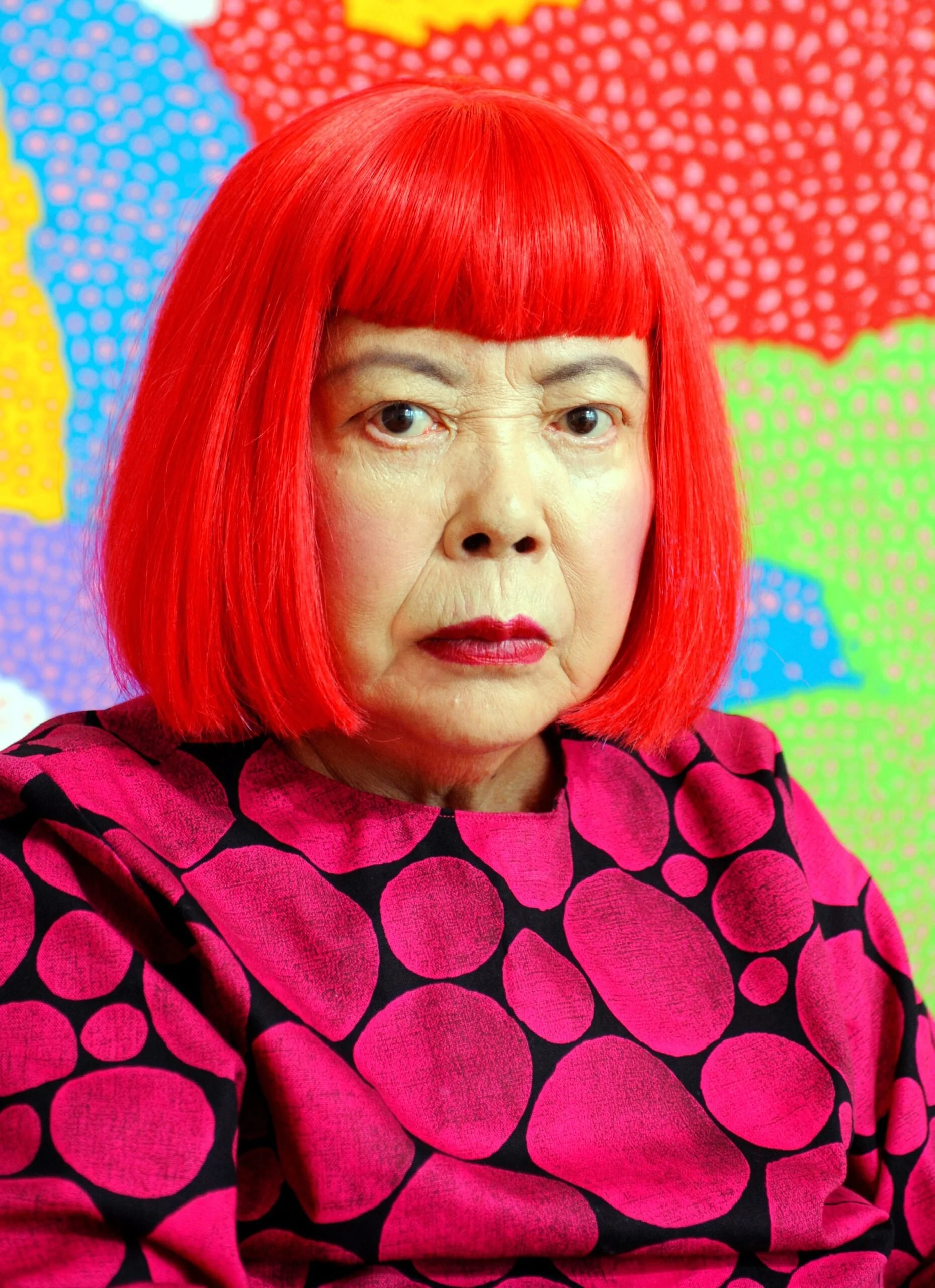
Yayoi Kusama is one of the most influential artists of the postwar era, the world’s top-selling female artist, and the most successful living artist. Kusama is best known for her immersive installations, sculptures, and paintings exploring themes of infinity, repetition, and self-obliteration.
Born in 1929 in Matsumoto, Japan, Kusama grew up in a conservative household; her family ran a plant nursery, and her parents did not support her ambition to become an artist. As a child, she began experiencing hallucinations including flashes of light, auras, and fields of dots that would come to greatly influence her artistic vision. Despite her parents' protests, in the late 1940s Kusama attended the Shiritsu Bijutsu Kōgei Gakkō in Kyoto, a preparatory school for Kyoto University of the Arts, where she studied the traditional painting style of nihonga. In 1952, she held her first solo exhibition at the First Community Center in Matsumoto.
Kusama moved to New York City in 1958, drawn by the energy of the Abstract Expressionist movement and wanting to escape the stifling and conservative Japanese art world. She quickly became a fixture of the city's pop-art and countercultural scenes. In 1959, she held her first solo exhibitions in the United States at Brata Gallery in New York and Nova Gallery in Boston, debuting her iconic Infinity Nets series. In 1962, she began creating her first Accumulation sculptures, starting with furniture but soon expanding into full-room installations. Throughout the 1960s, she continued exploring themes of repetition, reflection, and infinity, producing some of her most recognizable works, including Infinity Mirror Room—Phalli's Field (1965), Kusama's Peep Show/Endless Love Show (1966), her Self-Obliteration works, and her provocative public happenings.
In 1973, Kusama returned to Japan and suffered a difficult period following the deaths of her close friend Joseph Cornell (American, 1903–1972) and her father. Once back in Japan, she worked to push the boundaries of the country's contemporary art scene as an avant-garde figure. In 1977, she voluntarily moved into a psychiatric hospital, where she continues to live and work today.
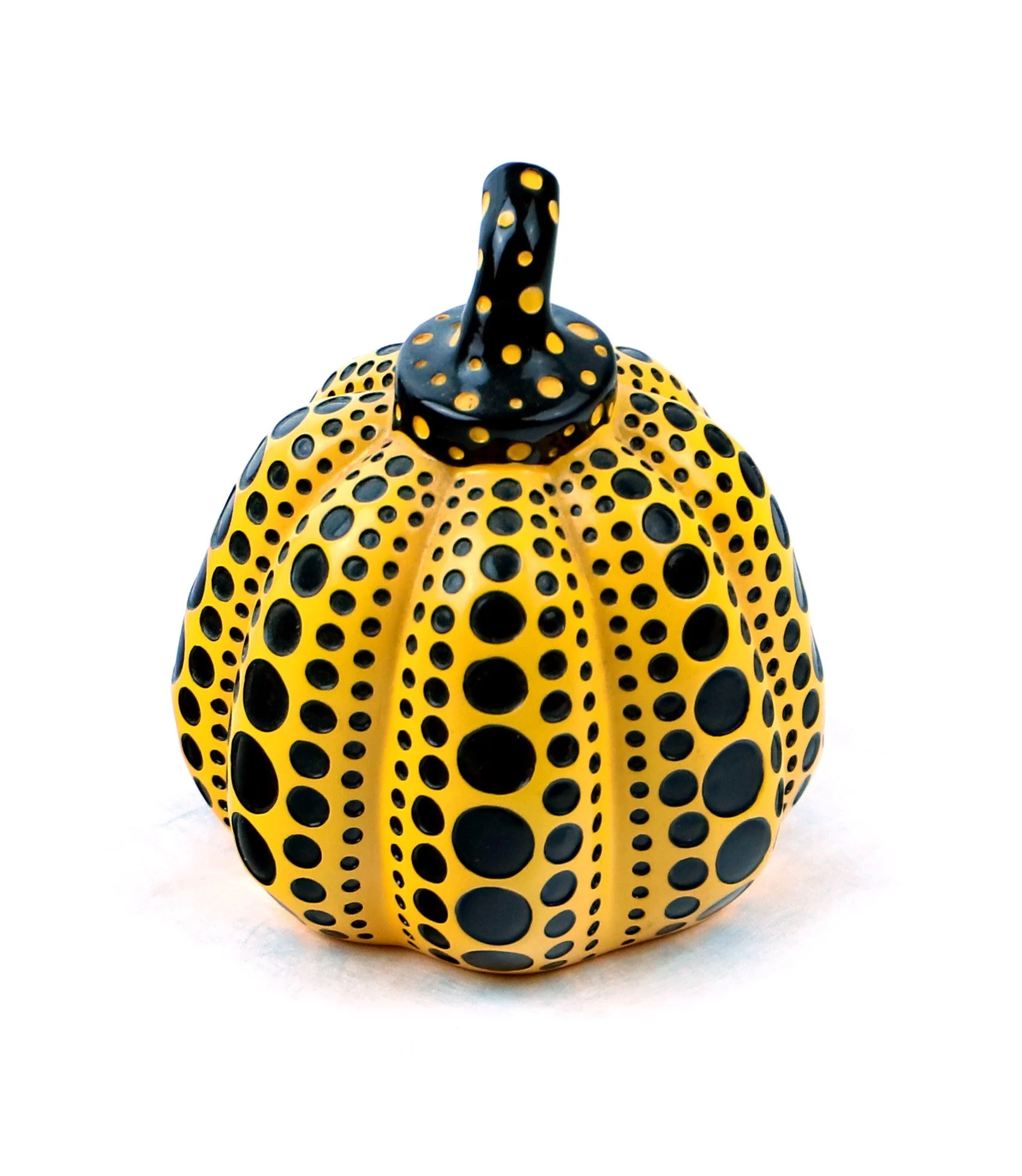
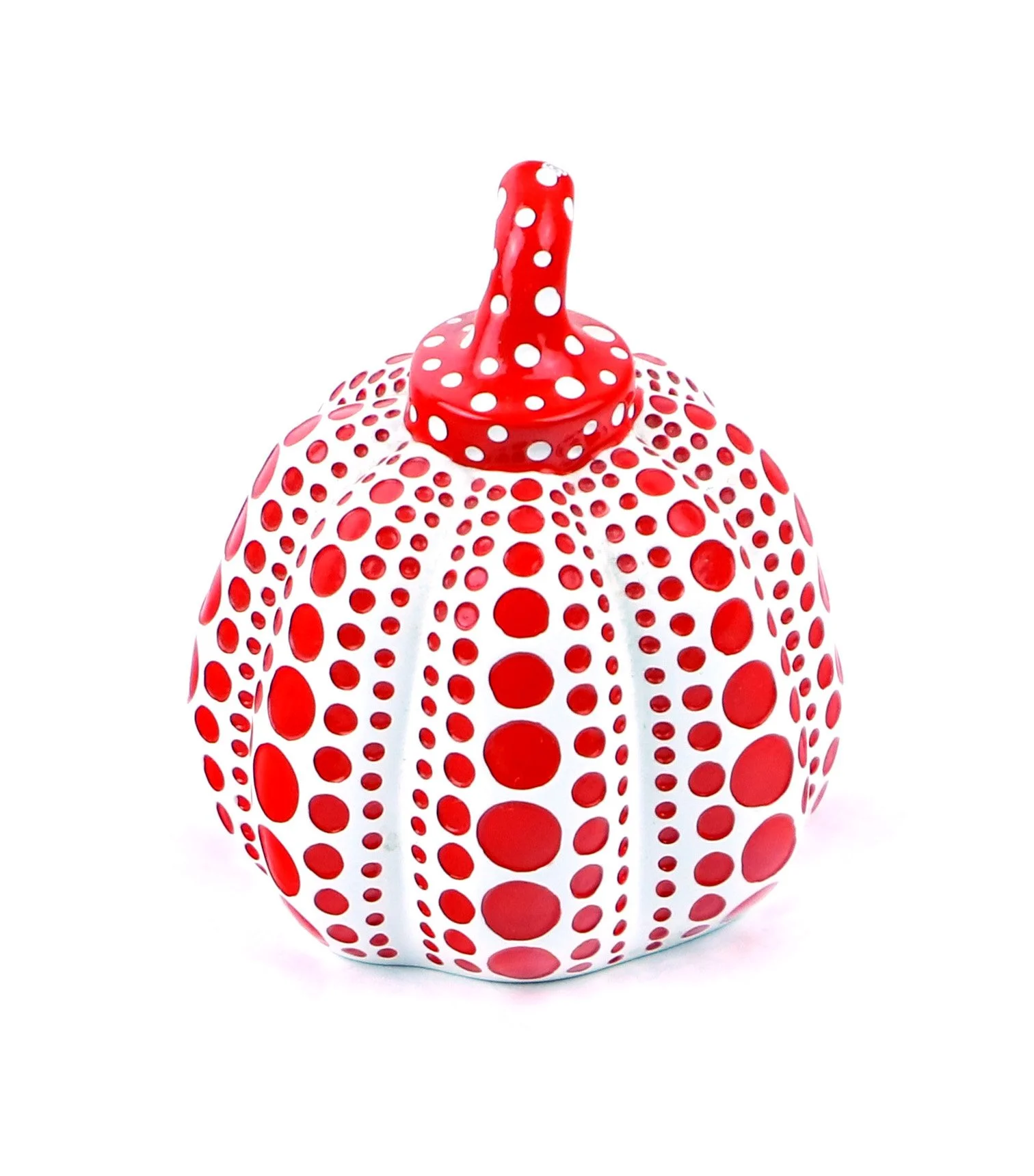
Kusama's work gained renewed international recognition in the late 1980s, including presentations at the Center for International Contemporary Arts, New York, and the Museum of Modern Art, Oxford, in 1989. In 1984 she debuted her now-signature pumpkin motif at an exhibition at Fuji Television Gallery in Tokyo. She represented Japan at the 45th Venice Biennale in 1993, being the first Japanese artist to be given a solo pavilion. In more recent decades, her work has been the subject of major retrospectives and solo exhibitions at institutions including the Hirshhorn Museum and Sculpture Garden in Washington, D.C., Tate Modern in London, the Centre Pompidou in Paris, the Whitney Museum of American Art in New York, and the M+ Museum in Hong Kong, among many others. In 2017, the Yayoi Kusama Museum opened in Tokyo, dedicated to her life and body of work. Kusama's work is held in the permanent collections of major museums around the world, including the Art Gallery of Ontario in Toronto, the Centre Pompidou in Paris, the Hirshhorn Museum, the Los Angeles County Museum of Art, the Museum of Modern Art in New York, the National Museum of Modern Art in Tokyo, the Stedelijk Museum in Amsterdam, Tate in the United Kingdom, the Walker Art Center in Minneapolis, and the Whitney Museum of American Art.