Most people begin collecting for one reason: they find something that speaks to them and choose to live with it. That instinct is enough. The enjoyment of art has always been, and should remain, at the heart of collecting.
Over time, however, a collection often becomes something more. Whether intentionally or not, it becomes part of a family's wealth. Like real estate, a closely held business, or an investment portfolio, it is an asset that deserves thoughtful management.
Art occupies a unique place within a portfolio. It has the potential to appreciate, it can be borrowed against, donated strategically, or passed thoughtfully from one generation to the next. Its value is driven by different forces than public markets, making it a distinct component of a broader financial plan.
This article explores how collectors and their advisors can think more intentionally about art as an asset, and how informed decisions today create greater flexibility and opportunity in the future.
Where Art Fits in a Portfolio
Most portfolios are built around a familiar mix of assets, including stocks, bonds, cash, real estate, private business interests, and commodities. Art occupies a different place within that landscape. Like any asset, it has the potential to appreciate in value, but it responds to a different set of market forces than traditional investments.
Unlike stocks or bonds, the value of art is driven by factors such as rarity, quality, provenance, exhibition history, scholarship, and collector demand rather than interest rates or corporate earnings. Those characteristics are what make art a unique complement to more traditional assets within a diversified portfolio.
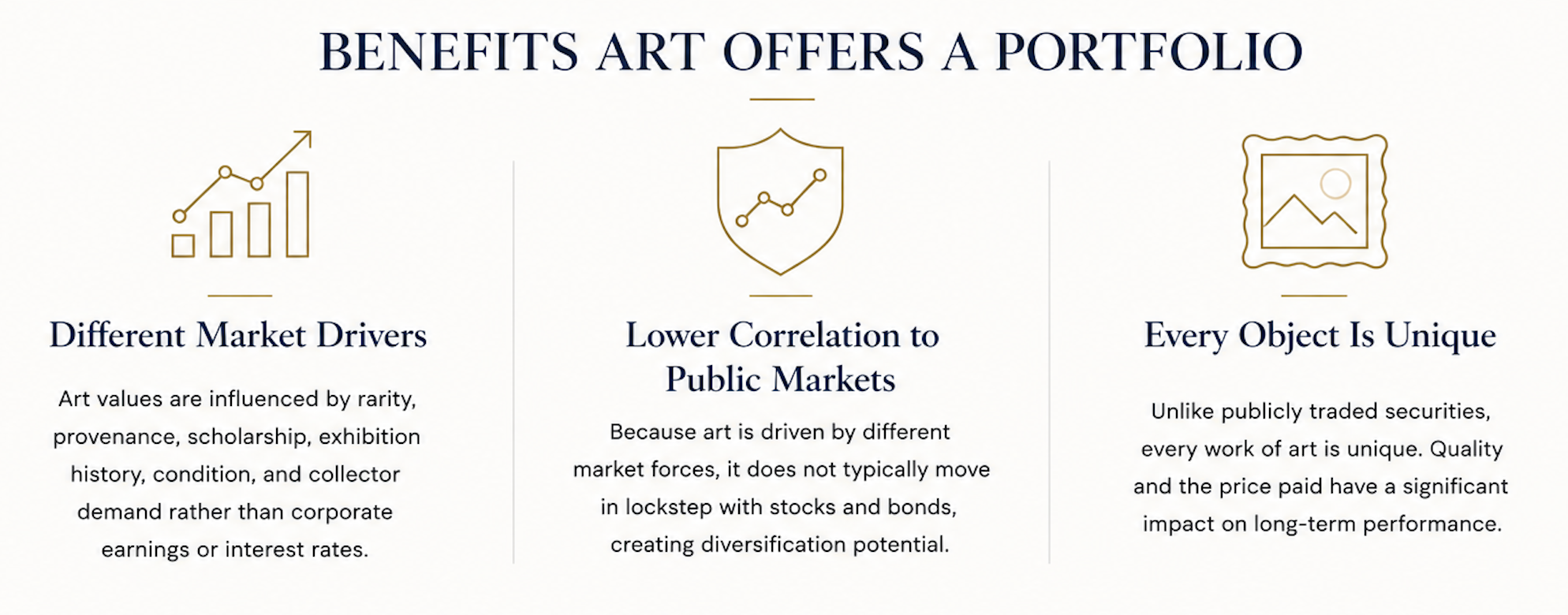
One characteristic sets art apart from nearly every other asset class: the individual object matters. A share of stock is interchangeable with every other share of the same company. No two works of art are alike. Two collectors may purchase works by the same artist and experience very different outcomes because one acquired an exceptional example at a price supported by the market, while the other did not.
That is why informed acquisition is so important. Long-term performance depends not only on choosing the right artist, but on selecting the right work and paying the right price. Comparable sales, provenance, condition, rarity, and market demand all play a role in determining whether a purchase is positioned to perform well over time.
The Scale of the Art Market
The global art market is considerably larger than many people realize. It supports millions of transactions each year and represents tens of billions of dollars in annual sales. For many collectors, art is not simply a passion or a personal interest. It is an established component of long-term wealth.
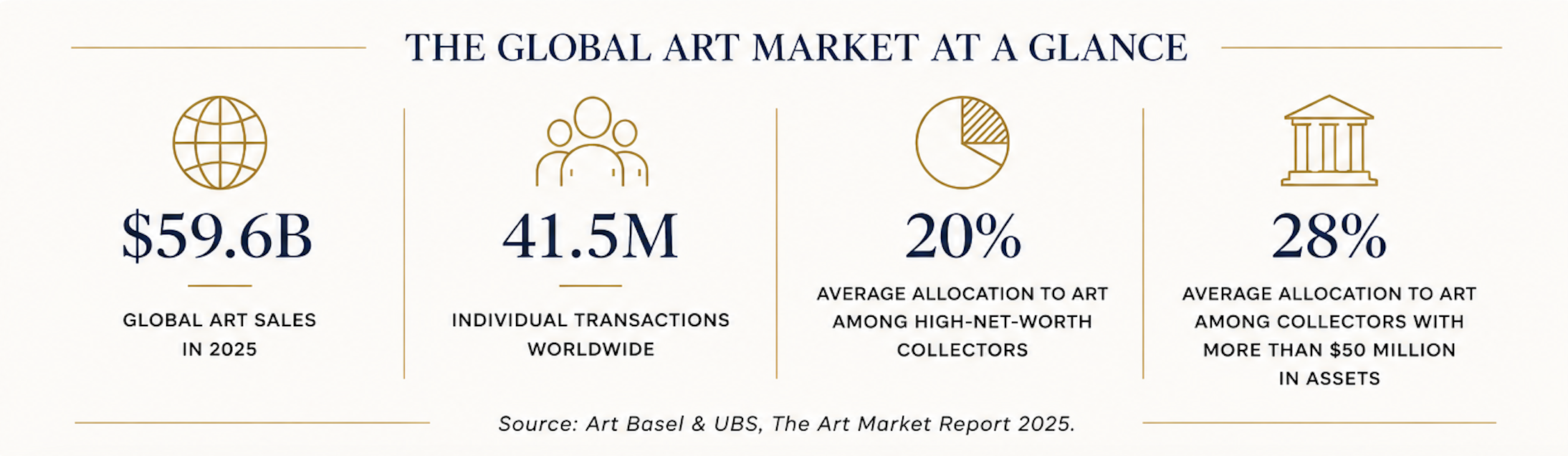
These figures reflect how many serious collectors approach their collections. Among high-net-worth individuals, art represents a meaningful portion of total assets, and that allocation continues to grow. For the largest collections, art often sits alongside real estate, business interests, and traditional investments as an intentional part of an overall wealth strategy.
The same principles apply beyond the ultra-high-net-worth market. Whether a collection is worth $100,000 or $100 million, understanding its value, documenting it properly, and making informed acquisition decisions creates greater flexibility and stronger long-term stewardship.
The Importance of Buying Well
Every opportunity discussed in this article begins with the same decision: what to buy and what to pay for it. By the time a work is appraised, sold, donated, or transferred to the next generation, the financial outcome has largely been shaped by the decisions made at the time of acquisition.
Unlike traditional investments, every work of art is unique. Two collectors can purchase works by the same artist and have very different financial outcomes because one acquired an exceptional example at a price supported by the market while the other did not. Successful collecting depends not only on choosing the right artist, but on selecting the right work and paying the right price.
Buying well is rarely about discovering the next great artist. More often, it is about asking the right questions before making a commitment.
Has comparable work actually sold at this price? An asking price reflects what a seller hopes to achieve. Comparable public sales provide the best evidence of what collectors have actually been willing to pay.
Is this an exceptional example of the artist's work? Not every work by the same artist carries the same market. Subject matter, date, medium, scale, provenance, condition, exhibition history, and literature all influence value.
Is there an established market for the artist? Collector demand is just as important as artistic merit. A strong collector base provides confidence that there will be buyers in the future should the work ever be sold.
How does this acquisition fit within the broader collection? Every purchase should strengthen the collection as a whole. Thoughtful acquisitions create balance, deepen areas of focus, and support long-term collecting goals.
What role will this work play over time? Whether the intention is to enjoy it for decades, borrow against it, donate it, or pass it to the next generation, understanding that path helps determine whether it is the right acquisition today.
The answers to these questions do not determine whether someone will love a work of art. They often determine whether that work becomes a successful financial asset over time.
The Diversification Benefit
The fact that art responds to different market forces than traditional investments is what gives it diversification potential. A thoughtfully assembled collection can complement traditional assets because its value is not necessarily influenced by the same factors that drive stocks and bonds.
That benefit, however, depends on buying well. Diversification is not achieved simply by owning art. It comes from owning quality works acquired at prices supported by the market. A poorly chosen acquisition does not strengthen a portfolio simply because it occupies a different asset class.
As with any investment, discipline matters. Careful research, informed acquisition, and an understanding of the market are what allow a collection to contribute meaningfully to a long-term wealth strategy.
Creating Liquidity Without Selling
One of the advantages of owning a well-documented collection is that it can provide financial flexibility without requiring a sale. Works of art with credible, current appraisals may be used as collateral for specialized art-backed loans, allowing collectors to access capital while continuing to own and enjoy their collection.
For collectors, this can create opportunities that might otherwise require selling a work. Whether funding a business venture, purchasing real estate, or addressing another short-term need, borrowing against a collection may preserve long-term ownership while avoiding the costs associated with an immediate sale.
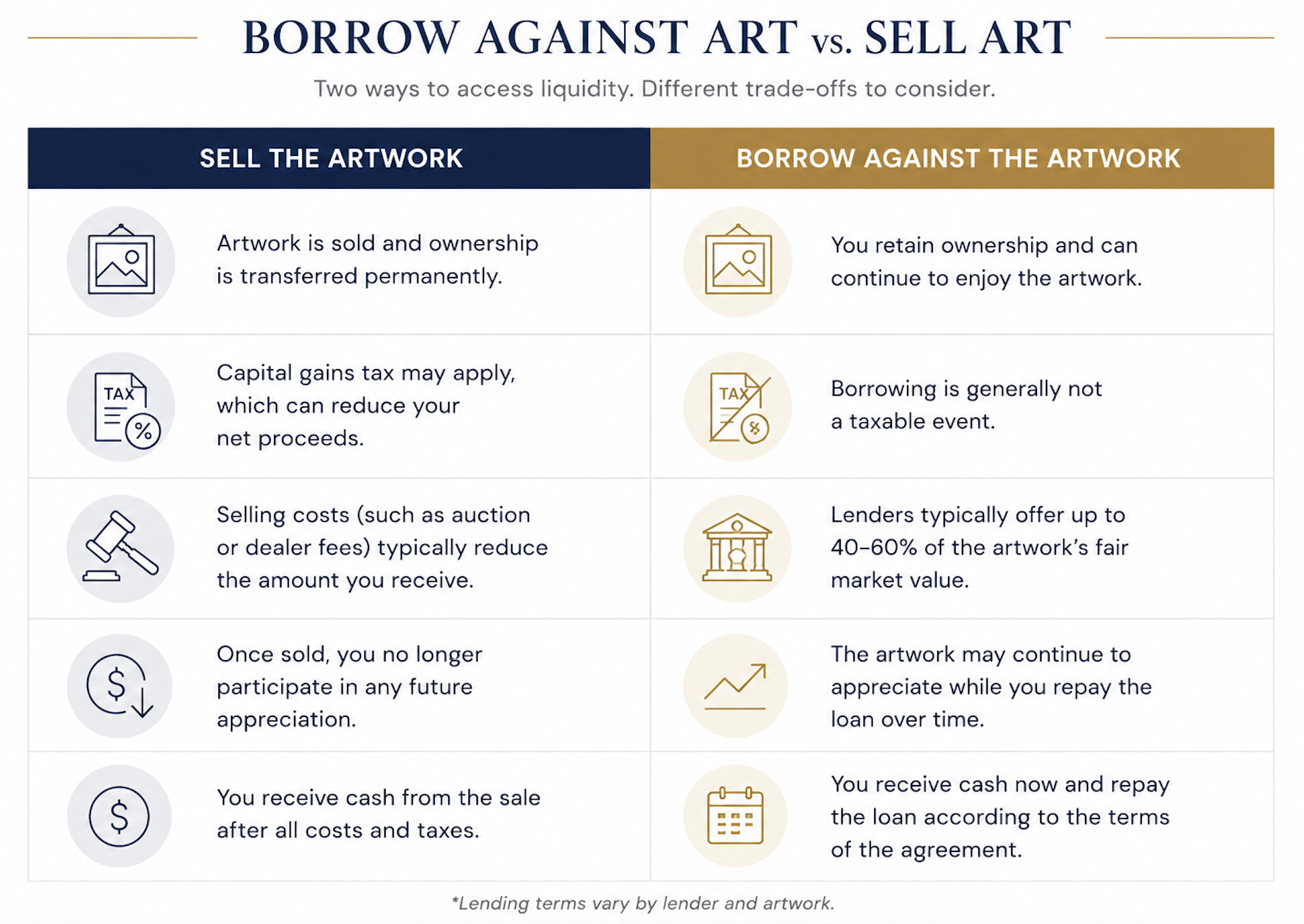
Specialized art lenders, as well as many of the major banks collectors already work with, will typically lend between 40 and 60 percent of a work's appraised fair market value, depending on the object and the strength of the market. The key requirement is a current, independent fair market value appraisal supported by market evidence. A purchase receipt from years ago or an outdated insurance schedule is rarely sufficient.
This illustrates an important principle that extends well beyond lending. A professionally documented collection creates options. It can support financing, estate planning, charitable giving, insurance, or future disposition strategies. Without current valuations and proper documentation, many of those opportunities simply are not available.
Other Ways a Collection can Create Value
A thoughtfully managed collection can do far more than appreciate in value. As collections mature, they often become useful tools for estate planning, philanthropy, and long-term wealth management.
Estate Planning
Significant works can be transferred over time through partial interests or other planning strategies, allowing families to move wealth thoughtfully while preserving important collections across generations.
Charitable Giving
Donating appreciated works to museums or other qualified institutions can support philanthropic goals while potentially providing meaningful tax benefits and placing important works where they can continue to be studied and enjoyed.
Collection Strategy
Just as investment portfolios benefit from diversification, collections often benefit from balance. Building across different artists, media, periods, and market segments can reduce concentration while creating a stronger, more resilient collection over time.
Each of these strategies begins with the same foundation: understanding what is owned, maintaining current valuations, and making acquisitions that support broader financial and collecting goals.
Putting Strategy into Practice
Collecting has never been solely about financial return, nor should it be. The enjoyment of living with art, supporting artists, and building a collection that reflects personal interests will always remain at the heart of collecting.
At the same time, a thoughtfully acquired and well documented collection can become an important financial asset. It can strengthen a broader portfolio, support estate and charitable planning, provide borrowing opportunities, and preserve wealth across generations. Realizing those opportunities begins with informed acquisition, current valuations, and a clear understanding of the market.
At Arcadia Art Consultancy, we work alongside collectors and the professionals who advise them, including wealth managers, financial advisors, estate planning attorneys, accountants, trust officers, and insurance professionals. Whether evaluating a potential acquisition, developing a collection strategy, preparing a USPAP-compliant appraisal, or planning for the eventual transfer or sale of a collection, our role is to provide independent guidance grounded in market expertise.
We believe art deserves the same thoughtful stewardship as any other significant asset. When collectors and their advisors have the right information, they are better equipped to make decisions that protect both the financial and personal value of a collection.
Art is already an asset. Our role is to help collectors and their advisors manage it with confidence.
Marie St. Germain
Director of Private Sales
marie@arcadiaappraisals.com